

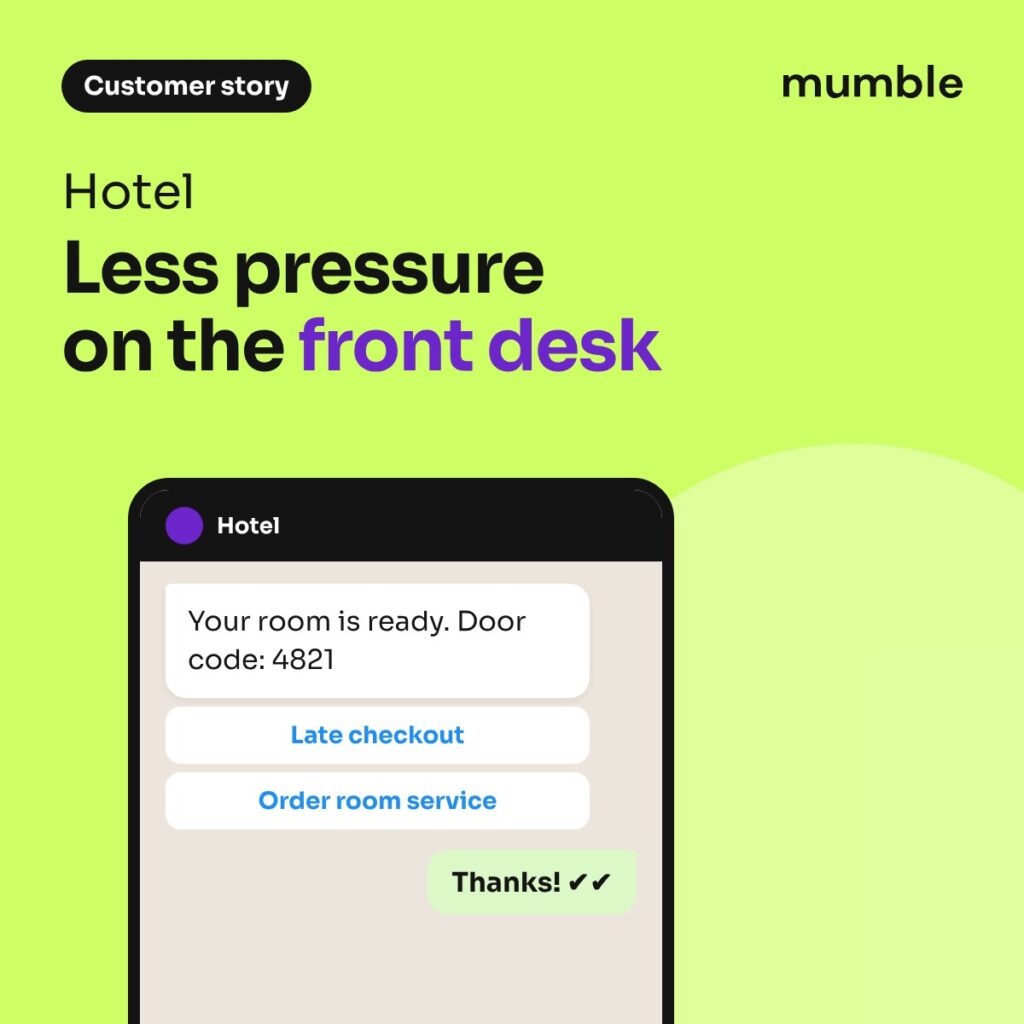

In short: A hotel with a busy front desk moved guest communication to WhatsApp. Automatic messages follow the guest from booking until after checkout, and all requests arrive in one shared inbox. The result: fewer phone calls, faster answers and happier guests.
The challenge
Guests asked the same questions again and again: when is check-in, how do I get into my room, how do I order room service. The team couldn’t keep up with every request by phone and at the desk, and wait times grew.
What we built
- After booking: a booking confirmation with a button for early check-in.
- Before arrival: the guest fills in their details on WhatsApp, so the line at the desk is shorter.
- On arrival day: a message when the room is ready, with a door code or instructions to pick up a key.
- During the stay: the guest writes directly, and the request reaches the right team, for example housekeeping or the front desk.
- Upgrade offers: for example a late checkout, sent the evening before departure, only to guests who agreed to receive marketing messages.
- After checkout: a request for feedback.
No app to download and no sign-up. Everything happens in WhatsApp, which is already on the guest’s phone.
What changed
- Fewer phone calls and less pressure on the front desk.
- Faster answers and higher guest satisfaction.
- More revenue from upgrades and extra services.
- All requests in one place, with a history for every guest.
Operational messages such as a booking confirmation or “your room is ready” are utility messages. Upgrade offers are marketing messages, which cost more. To estimate costs, use the message pricing calculator.
How to do this in your business
The same model fits any business with a clear customer journey and repeat questions: a clinic, a store, a service provider. Combine automations for messages at each stage, a shared team inbox for requests, and a chatbot for common questions.